6 Signs You’ve Been Living Someone Else’s Life (And What to Do About It)

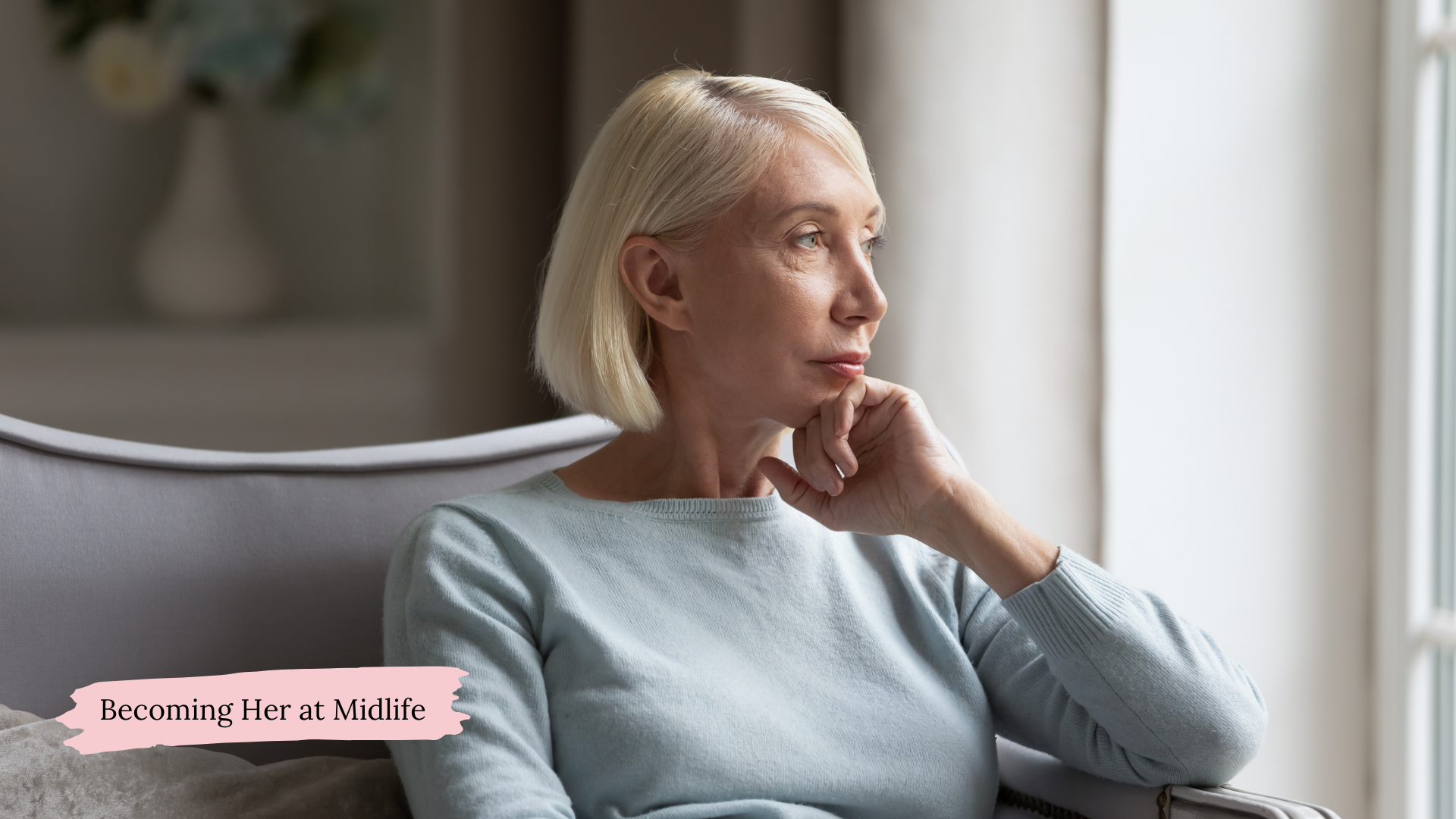
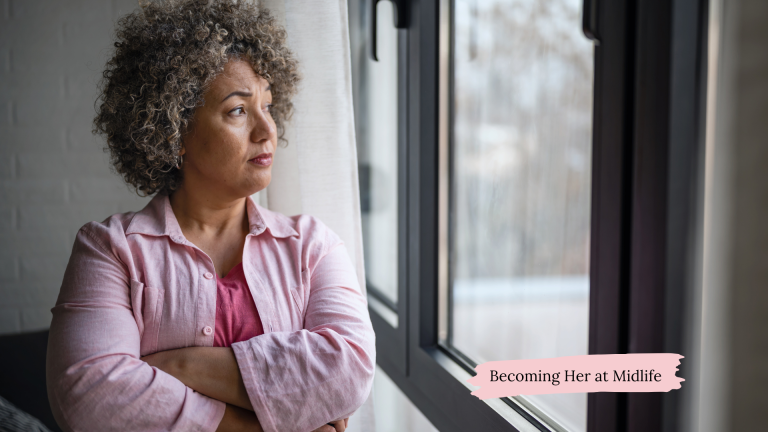
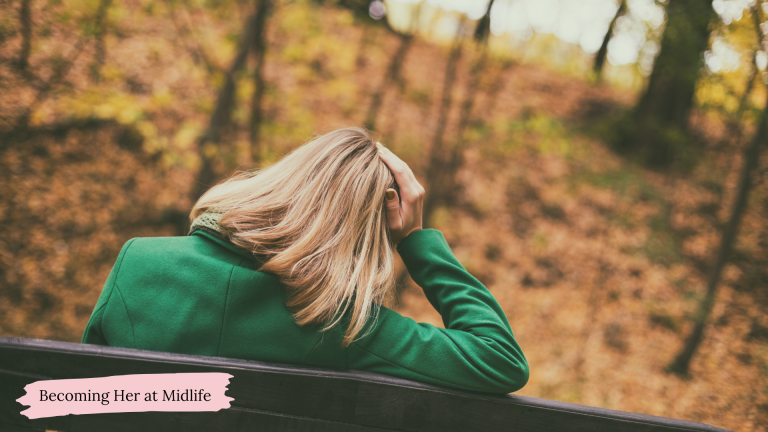
You’ve done everything right. You’ve shown up, given everything, kept everyone else going – and somewhere along the way, you lost yourself completely.
If you’ve been feeling like the life you’re living doesn’t quite fit anymore, you’re not alone, and you’re not imagining it.
If you’re ready to go deeper on your journey, the Becoming Her: A 30-Day Midlife Identity Shift Journal was created to help you get quiet, get honest, and reconnect with the woman you’re becoming – one guided prompt at a time.
So many women in midlife reach a quiet but powerful realization: they’ve been living for everyone else in midlife for so long that they genuinely don’t know who they are outside of it.
So this post is about recognizing the signs of that pattern, understanding why it happens, and knowing that it’s not too late to come back to yourself.
1. You’ve Been the One Who Always Shows Up For Others
There’s a version of selflessness that’s beautiful, and then there’s a version that slowly hollows you out.
If you’ve always been the one who reorganizes her own schedule first, says yes before she even thinks about whether she wants to, and fills every gap in everyone else’s life before considering her own needs, that’s not strength; it’s a pattern, and it has a cost.
The first sign that you’ve been living someone else’s life is that your days are built entirely around other people’s needs, preferences, and comfort, with very little room left over for yours.
2. You Can’t Remember the Last Time You Asked What YOU Wanted
When did you last make a decision based purely on what felt right for you?
Not what would be easier for the family, not what would avoid conflict, not what everyone else was expecting. Just you, and what you actually wanted.
I remember sitting with this question once and drawing a complete blank. That blankness is telling.
When we spend years deferring to others, we quietly train ourselves out of knowing what we want. The preference muscle weakens from disuse, and what’s left feels like emptiness when it’s actually just unfamiliarity.
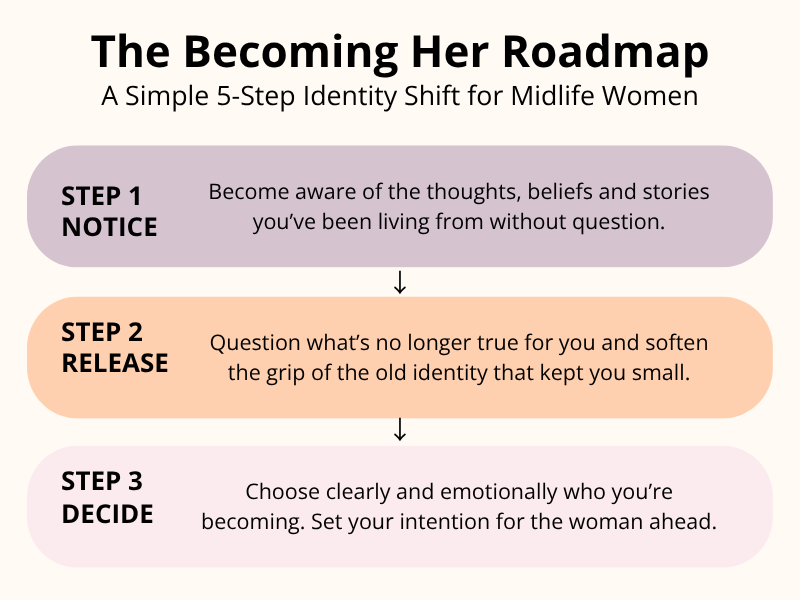
🌸 Not Sure Where To Start?
The Becoming Her Roadmap is a free 5-step framework for midlife identity shift.
Show Me The Roadmap3. Your Opinions Feel Like They Belong to Someone Else
Another sign worth noticing is when you realize that many of the opinions and values you’ve been carrying don’t actually feel like yours. They were absorbed from a partner, a parent, a role you played for so long that you stopped questioning it.
You might find yourself saying things you don’t fully believe, agreeing to avoid disruption, or holding back your real thoughts because somewhere along the way you learned that keeping the peace was safer than being honest.
That’s not who you are at your core. It’s a story you picked up and kept repeating until it started to feel like truth.
4. You Feel a Persistent Restlessness That Nothing Seems to Fix
This is one of the most common signs that something is out of alignment.
There’s a low-level dissatisfaction that follows you around, even when nothing is technically wrong. You’ve got a good life, you’re grateful, and yet something feels hollow or like it’s missing.
That restlessness isn’t ingratitude; it’s your real self, asking to be seen and recognized.
It shows up when you’ve been suppressing your own needs for so long that the gap between who you are and who you’ve been performing yourself to be becomes impossible to ignore.
5. You’ve Shrunk Yourself to Keep Others Comfortable
Look at the ways you’ve made yourself smaller over the years.
You might have:
- Stopped sharing your opinions in conversations where they might cause friction.
- Given up interests or hobbies that felt too “selfish” to pursue.
- Put your own goals on hold so many times that they stopped feeling like real options.
- Downplayed your achievements to avoid making others uncomfortable.
This kind of shrinking happens slowly and often looks like kindness from the outside. But there’s a difference between genuine generosity and the compulsive need to disappear.
One feels light; the other feels like slow erasure.
6. You Don’t Know Who You Are Without Your Roles
Ask yourself this honestly: if you strip away every role you play – mother, partner, caregiver, colleague, daughter – who’s left?
For many women in midlife, that question triggers a kind of quiet panic, because the answer feels murky or even nonexistent.
Your roles are part of your life, but they were never meant to be the whole of your identity.
When they become everything, when your entire sense of worth and purpose is tied to what you do for others rather than who you are, that’s a signal that something important has been pushed to the edges for too long.
Why This Happens – And Why It’s Not Your Fault
Living for everyone else in midlife isn’t a character flaw; it’s the product of years of conditioning, family dynamics, relationships, and cultural messages that told you your worth was tied to your usefulness.
Many of us absorbed beliefs early on, things like “it’s selfish to want more” or “I always have to do everything myself,” and those limiting beliefs quietly shaped how we showed up in the world for decades.
The good news is that identity isn’t fixed. You can choose new stories, and you can begin, right now in midlife, to decide who you actually are, what you actually want, and how you actually want to live.
How to Begin Coming Back to Yourself
You don’t need a dramatic overhaul; you just need to start paying attention.
Here’s where to begin:
- Notice your automatic yes. Before you agree to something, pause and check in with yourself. You don’t have to say no; you just need to make a conscious choice rather than a reflexive one.
- Start asking what you want. Even in small daily decisions, practice the question. It will feel strange at first, but keep asking anyway.
- Get curious about what lights you up. Think back to things you used to love before life got so full. What made you feel most alive? Those clues still matter.
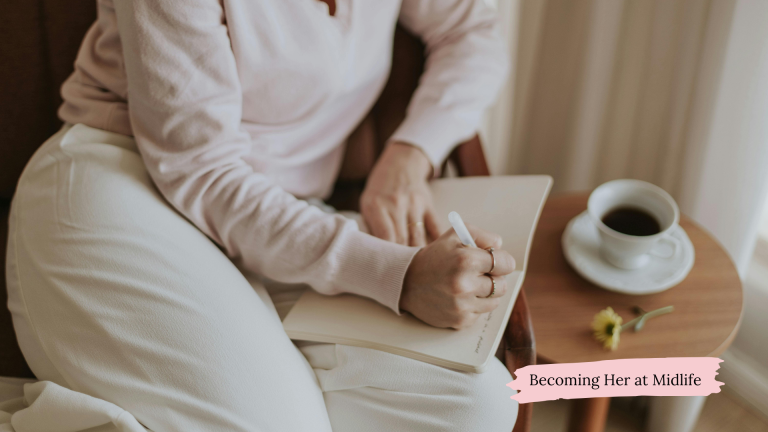
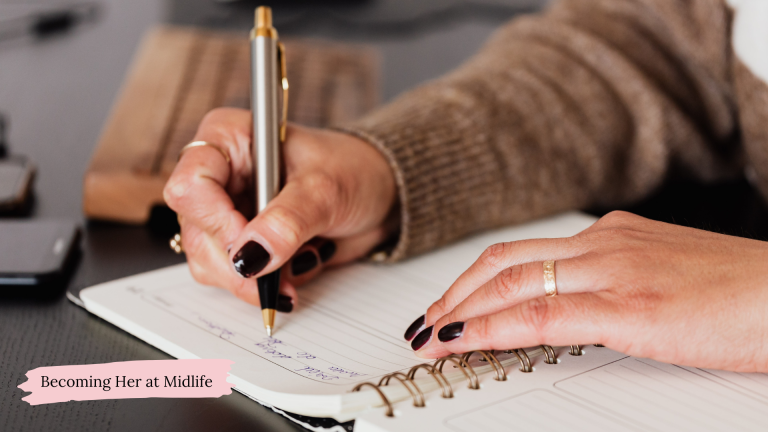
- Write it down. There’s something powerful about seeing your own thoughts on paper. It makes them real in a way that quiet reflection sometimes doesn’t.
This Is the Moment to Choose Yourself
Recognizing that you’ve been living for everyone else in midlife is not a reason to feel ashamed of the past. It’s an invitation to something different going forward.
You’ve spent years showing up for everyone else with such consistency and care, and now it’s time to offer some of that same devotion to yourself.
I truly believe this moment, the one where you pause and ask “but what about me?” is not a crisis – it’s a beginning.
If you’re ready to start reclaiming your identity in a way that feels grounded and deeply personal, the Becoming Her 30-Day Identity Shift Journal was created exactly for this.
It walks you through releasing the old stories, discovering what you truly want, and stepping into the woman you’ve been underneath it all along. You can find it at Becoming Her at Midlife.
🌸 Ready to go deeper?
The Becoming Her Journal was made for exactly this moment. Thirty days of guided prompts, reflections, and identity work written just for you.
Show Me The Journal