The Power of Identity Journaling for Women in Midlife

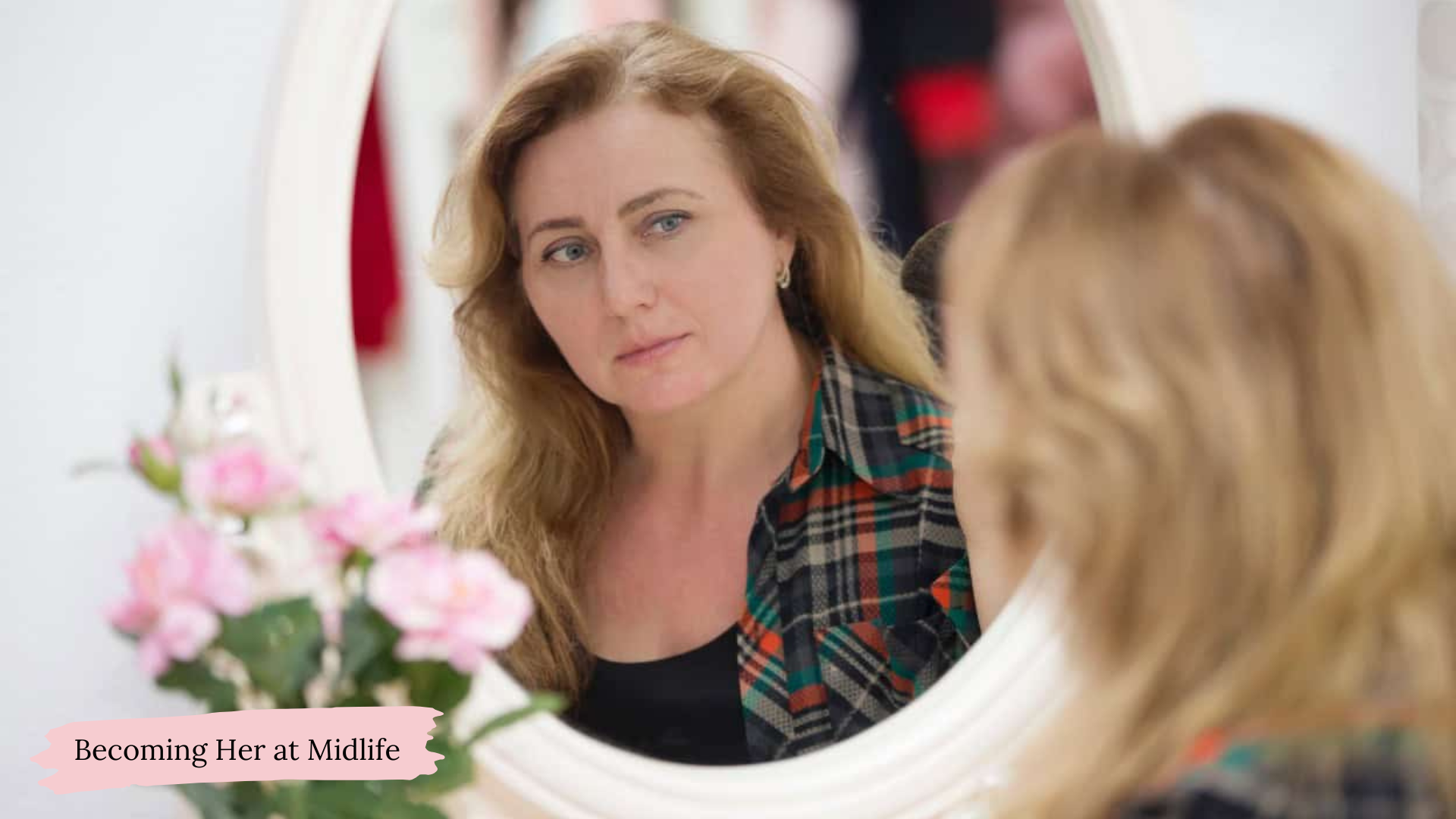
There’s something quietly revolutionary about sitting down with a blank page and asking yourself who you actually are.
- Not who you’ve been told to be.
- Not the roles you’ve filled for decades.
- Not the version of yourself that learned to shrink and accommodate and get on with it.
Just you. Who are you, beneath all of that?
That question is at the heart of identity journaling, and for women navigating midlife, it may be the most important question you ever take the time to answer.
I created Becoming Her: A 30-Day Identity Shift Journal for Women 50+ for midlife women who are ready to stop wondering who they are in midlife and start genuinely finding out, and if that’s you right now, it might be exactly what you need.
What Is Identity Journaling, Exactly?
Identity journaling is different from keeping a diary or logging your day. It’s a focused, intentional practice of using writing to explore who you are at your core, what you value, what you want, and what you’re ready to release.
Rather than asking “what happened today,” identity journaling asks the deeper questions.
- Who am I outside of my relationships?
- What do I believe about myself, and where did those beliefs come from?
- What would I do differently if I stopped being afraid of what others think?
It’s part self-discovery, part inner archaeology.
And it works.
Why Midlife Is the Right Moment for This Work
Midlife has a way of shaking loose everything you thought you knew about yourself.
Whether it’s the kids leaving home, the end of a relationship, a career that no longer feels like yours, or simply a quiet but persistent voice whispering that something needs to change, this season has a way of bringing the question of identity right to the surface.
I’ve seen this pattern again and again.
Women who spent their 30s and 40s being everything to everyone reach a point where they genuinely don’t know who they are when there’s nothing left to do.
That moment feels terrifying at first, but it is also, if you’re willing to lean into it, a profound invitation.
Identity journaling gives you a structured, safe way to answer that invitation.
🌸 Not Sure Where To Start?
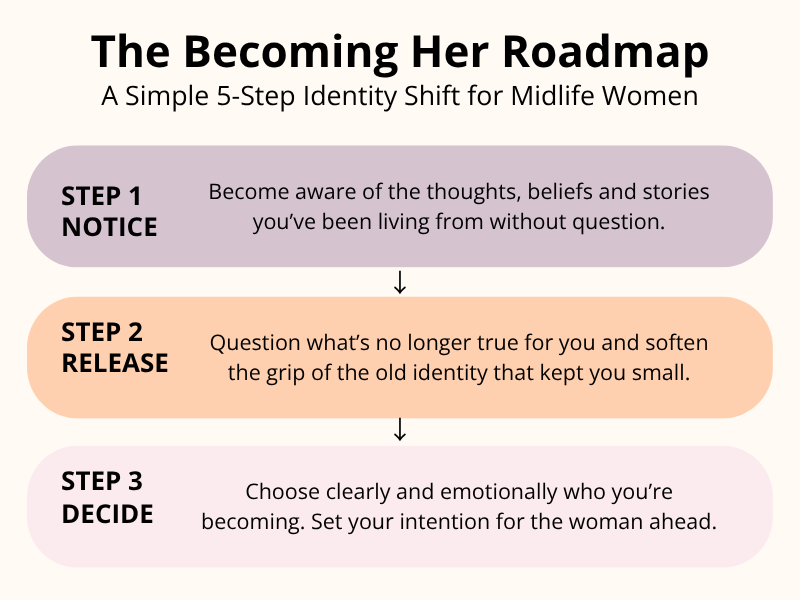
The Becoming Her Roadmap is a free 5-step framework for midlife identity shift.
Show Me The RoadmapThe Specific Benefits for Women in Midlife
The research on journaling for mental and emotional health is well-established.
But identity journaling in particular offers something even more targeted for women in this season of life.
➤ It helps you separate who you are from the roles you’ve played. Mother, wife, caregiver, professional. These are real and meaningful parts of your life, but they are not the whole of you.
Journaling gives you space to find the self that exists beyond the titles.
➤ It surfaces beliefs you’ve been carrying without questioning. Many of us have been operating from stories about ourselves that were written decades ago.
Identity journaling brings those stories into the light so you can decide which ones still serve you.
➤ It builds a relationship with yourself. When you spend time with your own thoughts on paper, consistently and intentionally, you begin to feel less like a stranger to yourself and more like someone you can trust.
➤ It helps you get clear on what you actually want. Not what you’re supposed to want, or what would make other people comfortable.
What you genuinely, deeply want for this next chapter of your life.
How to Start an Identity Journaling Practice
You don’t need a special notebook or a two-hour window of solitude. What you need is a starting point and a little consistency.
Begin with just ten to fifteen minutes a few times a week.
Find a quiet spot, something to write with, and a prompt that actually makes you think.
Avoid vague, generic prompts like “what are your goals?” and reach instead for questions that go somewhere, questions like “What version of myself am I most afraid to let go of?” or “When do I feel most like myself, and what does that tell me?”
Give yourself permission to write without editing. The first draft of your inner life doesn’t need to be polished; it just needs to be honest.
Over time, you’ll notice
- Patterns emerging.
- Themes in what lights you up.
- Threads of longing you’ve been ignoring.
- Old stories you’re finally ready to rewrite.
That’s when identity journaling stops feeling like an exercise and starts feeling like a genuine shift.
What Happens When You Commit to It
The transformation that comes from a consistent identity-journaling practice is rarely dramatic in the way we imagine it.
The transformation tends to be quieter than we imagine, more of a gradual softening of the rigid self-concept you’ve been carrying for years.
You’ll notice a growing sense of curiosity about who you might become, and with it, a slowly expanding willingness to try things, say things, and want things you’d quietly talked yourself out of for a very long time.
I truly believe this is one of the most powerful things a woman can do in midlife. Not because it fixes anything, but because it helps you find the person who already knows what needs to happen next.
You’ve spent enough years being who everyone else needed you to be. Identity journaling is how you come home to yourself.
You Don’t Have to Figure This Out Alone
If you’re not sure where to start, or if the blank page feels more overwhelming than inviting, a guided structure can make all the difference.
The Becoming Her Journal was created specifically for this moment in your life. It’s a 30-day identity journaling practice designed for women in midlife who are ready to stop feeling lost and start reconnecting with who they truly are.
Each day builds on the last, gently guiding you deeper into the questions that matter most.
If any part of this post resonated with you, the journal is your next step.
🌸 Ready to go deeper?
The Becoming Her Journal was made for exactly this moment. Thirty days of guided prompts, reflections, and identity work written just for you.
Show Me The Journal