How to Start Journaling When You Have No Idea What to Write

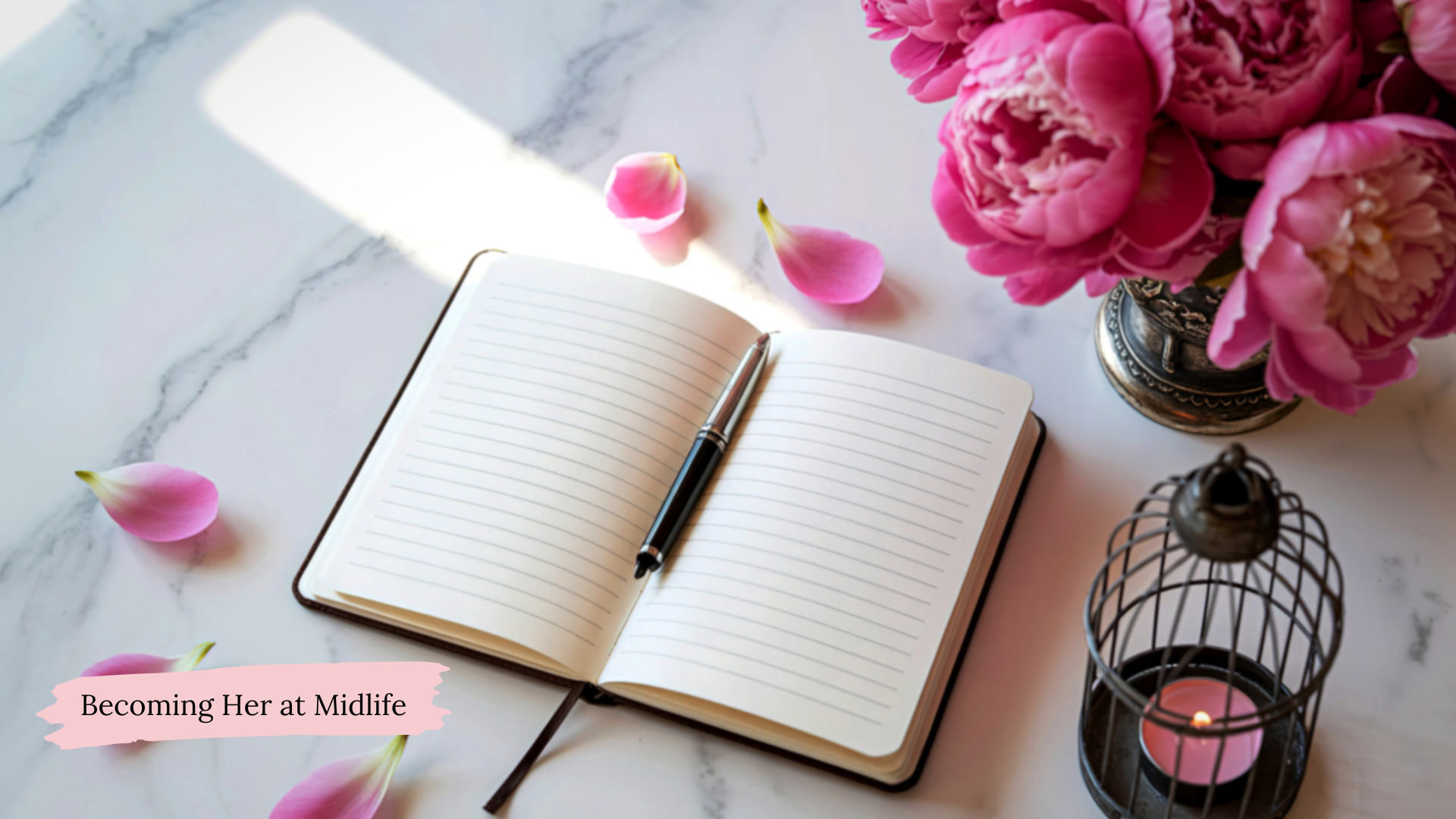
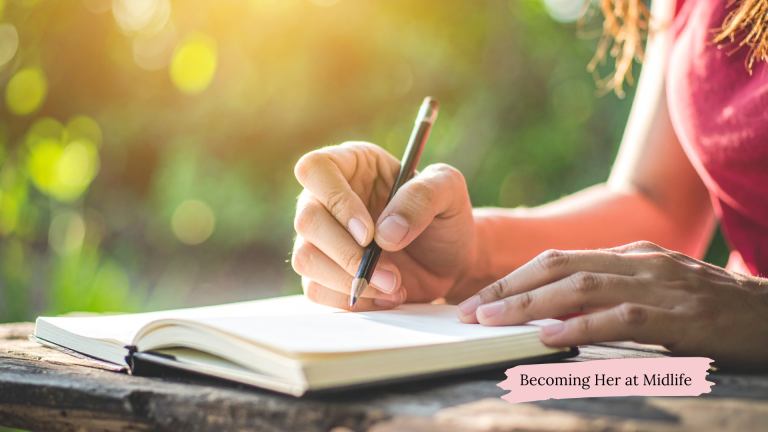
If you’ve ever sat down with a brand new journal, pen in hand, and felt your mind go completely blank, you’re not alone.
That empty page can feel surprisingly intimidating, especially when you came to it with the best of intentions.
Something brought you to this page today, and I don’t think that’s an accident – if you’re feeling the pull toward something more, my Becoming Her: A 30-Day Identity Shift Journal for Midlife Women is a gentle, guided way to start exploring who you really are in this next chapter of your life.
You wanted clarity, and you wanted to understand yourself a little better. You may have even hoped that writing a few honest words might help you figure out what this next chapter of your life is supposed to look like.
And then nothing came.
Here’s what I want you to know: that blankness isn’t a sign that journaling isn’t for you. It’s actually one of the most common experiences women have when they first sit down to write, and it usually just means you haven’t been given the right way in.
You Don’t Have to Write About Your Feelings
One of the biggest misconceptions about journaling is that it means pouring your emotions onto the page in some kind of cathartic flood.
For some people, that comes naturally, but for most of us, it doesn’t. And if you sit down expecting yourself to produce something deep and meaningful on demand, you’re going to feel like you’re failing at something that’s supposed to be simple.
The truth is, journaling for beginners works best when you give yourself a door to walk through rather than a blank room to fill.
That door is a prompt.
A single question; something small and specific enough that your brain has something to actually respond to, rather than staring into the void, wondering where on earth to start.
Start Smaller Than You Think You Need To
If you’re new to journaling, forget the idea that you need to write pages and pages. Five minutes is enough, and three sentences are enough. Even one honest line written down is more than you had before you sat down, and it counts.
The goal at the beginning isn’t volume; it’s the habit of showing up to the page at all.
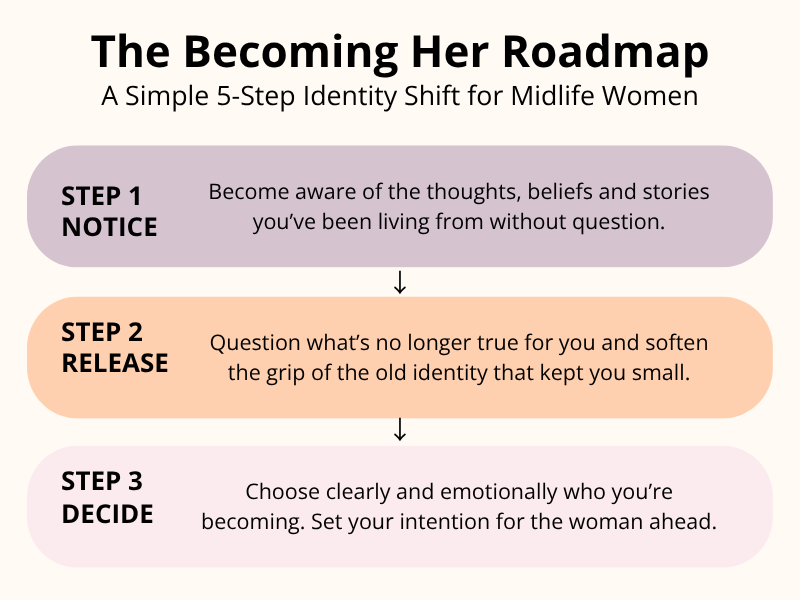
🌸 Not Sure Where To Start?
The Becoming Her Roadmap is a free 5-step framework for midlife identity shift.
Show Me The RoadmapYou’re essentially training yourself to believe that you have something worth writing, which is a belief that takes a little time to settle in if you’ve spent years putting everyone else’s thoughts and needs ahead of your own.
A good starting practice is simply to write whatever is in your head right now, without editing it or trying to make it sound a certain way.
- What are you thinking about?
- What did you notice today?
- What’s been sitting quietly in the back of your mind this week?
You don’t need to resolve anything; you just need to get it out of your head and onto the page, and see what happens when you do.
Try These Simple Prompts If You’re Stuck
Prompts work because they remove the pressure of having to come up with your own starting point.
Here are a few gentle prompts that work especially well if you’re journaling for the first time:
➤ What do I actually want my days to feel like right now?
This one tends to surprise women because so many of us have spent years making our days work for other people. Just the act of asking yourself what you want, and letting yourself answer honestly, can be quietly revelatory.
➤ What’s something I’ve been putting off thinking about?
The things we avoid are usually the things most worth spending a little time with. This prompt gives you permission to finally look at them without having to immediately fix them.
➤ What did I used to love doing that I’ve somehow stopped?
This is a beautiful one for midlife women in particular, because somewhere between the years of raising children, building a career, or holding a household together, so many of us quietly abandoned the things that once lit us up. Writing about them even briefly can remind you they’re still there, still available, still yours.
➤ What’s one thing I’d like to feel more of in my life?
Not necessarily achieve nor accomplish. Just feel the peace, lightness, excitement, belonging, whatever it is for you. Let yourself answer without judging whether it’s realistic.
The Messiness Is Part of It
Your journal doesn’t need to be eloquent or well-structured or even particularly coherent. It’s not a diary intended for publication, and it’s not going to be read by anyone. It’s a private conversation between you and yourself, which means the usual rules about writing well simply don’t apply here.
Some days you’ll write something that genuinely surprises you, a thought that surfaces out of nowhere and turns out to be exactly what you needed to hear. Other days you’ll write something that seems completely inconsequential, and that’s fine too.
The value of journaling isn’t only in the breakthroughs, it’s in the regular practice of turning inward, checking in with yourself, and treating your own inner life as something worth paying attention to.
Give Yourself a Simple Ritual Around It
One of the reasons women stick with journaling is because they attach it to something they already enjoy. A cup of tea in the morning before the house wakes up, or a few minutes in the afternoon when the day quiets down.
The ritual around the journaling often matters as much as the journaling itself, because it signals to your brain and your body that this is your time, and that you’re worth making time for.
You don’t need a beautiful journal, although there’s nothing wrong with treating yourself to one you love, and you don’t need a special pen or a dedicated writing space.
All you need is the willingness to show up to the page and write a few honest words, even if they’re just “I don’t know where to start today.”
That sentence, written down, is already a beginning.
When You’re Ready to Go Deeper
Once the habit starts to feel natural, you might find yourself wanting more direction, a framework that takes you somewhere rather than just giving you space to process.
That’s when a structured journaling experience can be genuinely transformative.
The Becoming Her Journal was designed exactly for that moment, for the woman who’s ready to use her journaling practice not just as a space to reflect, but as a way to consciously step into who she wants to be next.
But even if you never go that far, even if you just start with five minutes and a single question each morning, you’ll be surprised by how much begins to shift when you make a regular habit of listening to yourself.
🌸 Ready to go deeper?
The Becoming Her Journal was made for exactly this moment. Thirty days of guided prompts, reflections, and identity work written just for you.
Show Me The Journal